
Which Injection Is Right for You?
Comparing PRP, Hyaluronic Acid and Cortisone Injections
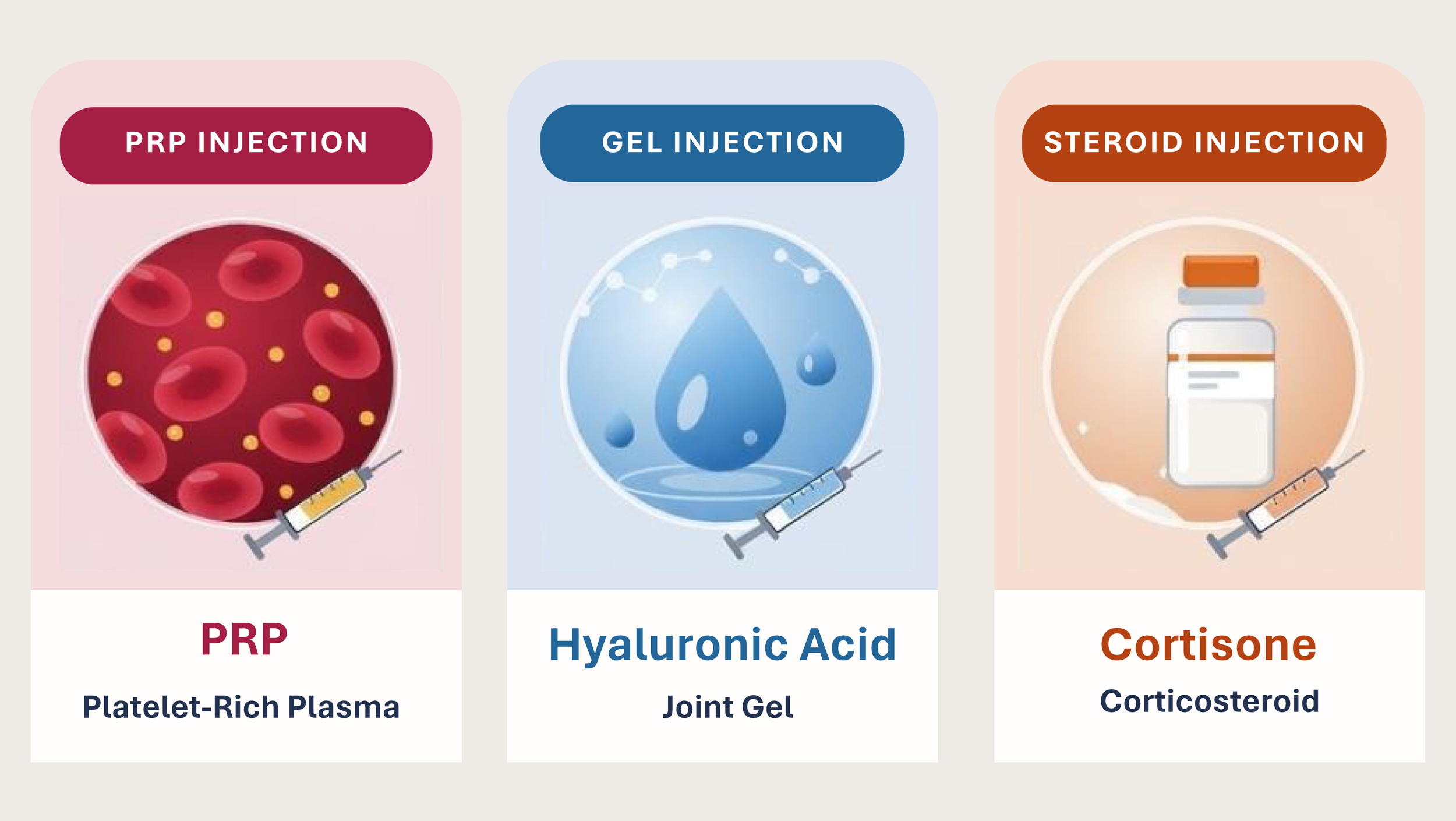
PRP, hyaluronic acid and cortisone injections are used to manage a range of joint, tendon and musculoskeletal conditions. Each treatment works differently, with different potential benefits and recovery timelines.
At IN Radiology in Brunswick, our doctors perform ultrasound-guided injections to accurately target the treatment area.
Understanding the differences can help you and your doctor decide which option may be suitable for your condition.
Platelet-Rich Plasma (PRP) Injections
PRP injections use a concentrated preparation of platelets from your own blood to support the body's natural healing response.
PRP may be used for tendon problems, ligament injuries and certain joint conditions, including mild to moderate osteoarthritis.
Key things to know:
Uses platelets from your own blood.
Aims to support the body's natural repair processes.
Improvement is generally gradual and may take several weeks.
Some patients may experience benefits lasting several months.
Hyaluronic Acid (Gel) Injections
Hyaluronic acid is a substance naturally found in joint fluid. Gel injections aim to improve lubrication and cushioning within the joint, potentially reducing pain and improving movement.
These injections are commonly considered for knee osteoarthritis and may also be used in other joints, including the hip, shoulder or ankle.
Key things to know:
Helps lubricate and cushion the joint.
May reduce discomfort associated with movement.
Benefits may develop over several weeks.
Relief may last several months for some patients.
Cortisone (Corticosteroid) Injections
Cortisone injections contain corticosteroid medication that reduces inflammation in the targeted area.
They are commonly used to manage inflammatory conditions affecting joints, bursae and surrounding tissues.
Key things to know:
Works by reducing inflammation.
May provide relief within a few days.
Benefits are generally shorter-term, lasting weeks to a few months.
Repeat injections may be limited depending on the condition.
How Do These Injections Compare?
What is it?
PRP - Concentrated platelets from your own blood
Hyaluronic Acid - A gel similar to natural joint fluid
Cortisone - An anti-inflammatory steroid medication
How it works
PRP - Supports the body's natural healing response
Hyaluronic Acid - Lubricates and cushions the joint
Cortisone - Reduces inflammation and pain
Often used for
PRP - Tendon problems and certain joint conditions
Hyaluronic Acid - Knee osteoarthritis
Cortisone - Bursitis, inflammatory flare-ups and certain joint or tendon conditions
Approx. onset of relief
PRP - Gradually, over several weeks
Hyaluronic Acid - Over a few weeks
Cortisone - Often within a few days
Approx. duration of relief
PRP - Several months for some patients
Hyaluronic Acid - Several months for some patients
Cortisone - Weeks to a few months
PRP - May involve a course of injections
Hyaluronic Acid - May be repeated if appropriate
Cortisone - Frequency of repeat injections may be limited
Good to know
These are general comparisons only. Treatment response, duration of relief and suitability vary depending on the condition and individual patient.
Why Are Injections Ultrasound-Guided?
At IN Radiology, injections are performed using real-time ultrasound guidance.
Ultrasound allows your doctor to visualise the relevant anatomy and guide the needle to the intended treatment area.
This is particularly useful when treating joints, tendons and other musculoskeletal structures where accurate needle placement is important.
Why Are Injections Ultrasound-Guided?
There is no single injection that is best for everyone.
The most appropriate treatment depends on your diagnosis, symptoms, medical history, treatment goals and response to previous therapies.
Your doctor can discuss the potential benefits, limitations and risks of each option and help determine whether an injection is appropriate for you.
FAQS
-
PRP uses concentrated platelets from your own blood and aims to support the body's natural healing response. Cortisone is an anti-inflammatory medication used to reduce inflammation and associated pain.
Cortisone may provide relief more quickly, while improvement following PRP is generally more gradual.
-
No. Hyaluronic acid injections aim to improve joint lubrication and cushioning, while cortisone injections reduce inflammation. They work differently and may be considered for different clinical circumstances.
-
The duration of relief varies depending on the injection, the condition being treated and the individual. Some patients experience benefits lasting several months, while others may experience limited or no improvement.
-
PRP, hyaluronic acid and cortisone injections may be considered for certain patients with osteoarthritis. Their suitability depends on factors including the affected joint, severity of symptoms and available evidence for the particular treatment.
Not every injection is recommended for every type of arthritis.
-
Your condition and medical history should be assessed to determine whether an injection is appropriate. Contact IN Radiology to discuss the appointment and referral requirements for your treatment.
IN Radiology provides ultrasound-guided musculoskeletal injections at 271 Lygon Street, Brunswick.
To enquire about PRP, hyaluronic acid or cortisone injections, contact our team.
Phone: (03) 8904 8040
Location: 271 Lygon Street, Brunswick VIC 3056
Contact Us: Via the form below
Ultrasound-Guided Injections in Brunswick
Please note that while this isn't a confirmed appointment just yet, one of our friendly team members will be in touch to arrange a date and time that suits you perfectly. We look forward to assisting you.
OPENING HOURS:
We are open Monday - Thursdays 9am - 5pm and every second Friday For more directions and opening hour details click here.
PREPARING FOR PRP INJECTIONS:
Before your procedure, please tell your doctor if you:
Take blood-thinning medication
Have a bleeding disorder or low platelet count
Have an infection or are currently unwell
Are pregnant or may be pregnant
Unless your doctor advises otherwise, avoid anti-inflammatory medication for one week before your procedure.
You may eat and drink normally before your appointment.